- ▪ Emilia-Romagna
- ▪ Lazio
- ▪ Tuscany
- ▪ Umbria
The Fifth Flavor of Tuscany: A Journey Through Lampredotto and the Tradition of Florence’s ‘Trippai’
Content index
The History and Authentic Taste of Florentine Street Food You Need to Know
Florence, the cradle of the Renaissance, is a city that nourishes the soul with its sublime art, majestic architecture, and landscapes that look like paintings. But to truly nourish the Florentine spirit, one must go beyond galleries and cathedrals and dive into a culinary tradition that pulsates in the heart of its streets: street food. And, in this universe of authentic flavors, a sandwich reigns supreme, challenging palates and telling the city’s story in every bite: lampredotto.
Forget for a moment the bistecca alla fiorentina and Chianti wines. In this ITALIA et al guide, we invite you on a bold and profoundly authentic journey to discover the “fifth flavor of Tuscany.” We will unveil what lampredotto is, its humble origins linked to the city’s workers, the centuries-old art of the trippai who prepare it, and, of course, where to find the best carts to taste this delicacy that is the true essence of the Florentine soul.
What is Lampredotto, After All?
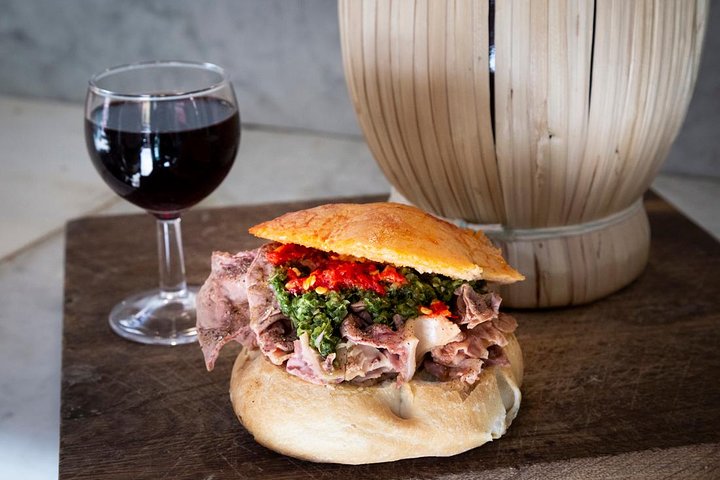
Lampredotto is a sandwich made with the fourth and final stomach of the cow, the abomasum. This part of the offal is cooked slowly for hours in an aromatic broth with vegetables (onion, carrot, celery), herbs, and sometimes tomato, until it is incredibly tender and flavorful.
The ritual of serving is as important as the preparation. The trippaio (the tripe vendor) removes the steaming lampredotto from the broth, skillfully chops it on a wooden board, and generously places it inside a rustic Tuscan bread, the panino. Traditionally, the bread is dipped (“bagnato”) in the upper part of the broth before being stuffed, adding moisture and flavor. To finish, you can choose the condiments: salt, pepper and, the most traditional, salsa verde (a vibrant sauce of parsley, capers, anchovies in olive oil) and/or salsa piccante (chili sauce).
The result is a surprisingly delicate, juicy, and flavorful sandwich, an explosion of “umami” that warms and comforts.
A Heritage of “Cucina Povera”: The Food that Built Florence
The history of lampredotto is intrinsically linked to the “cucina povera” (poor cuisine) and the working class of Florence. For centuries, the less noble parts of animals, known as the “quinto quarto” (fifth quarter, after the two front and two hindquarters), were what remained for the humblest workers. Butchers and offal vendors settled along the Arno River, cooking these pieces in large pots to feed the workers, artisans, and boatmen.
Lampredotto became a quick, nutritious, and, above all, accessible lunch. The carts of the trippai, with their steaming pots and inviting aroma, became an integral part of the urban landscape, social meeting points where news was exchanged and the life of the city pulsed. The name “lampredotto” is believed to derive from the “lampreda” (lamprey), a type of eel that was abundant in the Arno and whose mouth resembled the texture of the cooked stomach.
Tasting a lampredotto today is more than a gastronomic experience; it is an act of connection with the living history of Florence, a tribute to the ingenuity and resilience of a people who knew how to transform necessity into a revered delicacy.
The ‘Trippai’: Guardians of a Secular Tradition
The trippai are the true heroes of this story. More than vendors, they are artisans who guard the secrets of a tradition passed down from generation to generation. Each trippaio has his own secret recipe for the broth, his own tricks to ensure the tenderness of the meat, and his particular version of the salsa verde.
Observing a trippaio in action is a spectacle. With quick and precise movements, he handles the knives, chops the lampredotto, assembles the sandwich, and interacts with the customers, many of whom are regulars who call him by name. The relationship between the trippaio and his clientele is one of trust and familiarity. They don’t just sell food; they share a piece of the Florentine soul.
Where to Find the Best Lampredotto in Florence: An Itinerary Through Iconic Carts
Finding a lampredotto cart (or kiosk) in Florence is not difficult, but some are true institutions. Here are some of the most famous and beloved by locals:
- ‘L Trippaio di San Frediano (in front of Piazza de’ Nerli): Located in the authentic Oltrarno neighborhood, this kiosk is a favorite of Florentines. Simone, the charismatic owner, serves a classic and delicious lampredotto, in a genuine and welcoming environment.
- Da’ Vinattieri (Via Santa Margherita, 4r): Hidden in a small alley near Dante’s House, this small and historic establishment serves not only a fantastic lampredotto, but also other dishes of “cucina povera”, accompanied by a glass of simple wine.
- Trippaio del Porcellino (Piazza del Mercato Nuovo): Conveniently located next to the famous Bronze Boar (Porcellino), this is one of the most traditional carts. It’s a perfect place for a tasty break while exploring the tourist heart of the city. The quality is excellent and the experience, authentic.
- Nerbone (inside Mercato Centrale): On the ground floor of the vibrant Central Market, Nerbone has been an institution since 1872. Although also famous for its boiled beef sandwich (panino con il bollito), its lampredotto is equally unmissable. Prepare for the queue, but the wait is worth it.
- Aurelio I’ Re del Lampredotto (Via di Scandicci): A little further from the center, Aurelio is a legend among connoisseurs. It is a great option for those who want to escape the tourist route and taste a lampredotto revered by locals.
ITALIA et al Tip: Don’t be afraid! Approach the cart with confidence, order your “panino con lampredotto, completo” (which means with salt, pepper, green sauce, and spicy sauce) and with bread “bagnato”. And get ready for one of the most authentic and memorable gastronomic experiences that Florence has to offer.
The Flavor of True Florence
Lampredotto is a testament to the Florentine soul: rustic, honest, full of history, and surprisingly delicious. It is proof that the greatest gastronomic pleasures often reside in the simplest ingredients and the most humble traditions. By savoring this iconic sandwich, you are not just satisfying hunger; you are participating in a centuries-old ritual, honoring the history of the workers who built the city, and discovering the true heart of Florence.
To continue exploring the authentic flavors and fascinating stories behind Italian cuisine, follow the ITALIA et al blog. We are always looking for new delicacies to share and inspire your next adventure. Buon Appetito!
You may also like
-

The Best Apps for Saving Money in Italy
- Tuscany
- ▪ Abruzzo
- ▪ Aosta Valley
- ▪ Apulia
- ▪ Basilicata
- ▪ Calabria
- ▪ Campania
- ▪ Emilia-Romagna
- ▪ Friuli Venezia Giulia
- ▪ Lazio
- ▪ Liguria
- ▪ Lombardy
- ▪ Marche
- ▪ Molise
- ▪ Piedmont
- ▪ Sardinia
- ▪ Sicily
- ▪ Trentino South Tyrol
- ▪ Umbria
- ▪ Veneto
-
-
-














You need to be part of our community to leave a comment or reply members.
Log in or purchase one of our incredible itineraries!