- ▪ Tuscany
The Importance of Florence: The Birthplace of the Renaissance
Content index
Explore the cultural and artistic epicenter of the city.
Florence, a gem nestled in the heart of Tuscany, is not just a city; it is a vibrant symbol of one of the most significant periods in human history: the Renaissance. This cultural movement, which flourished between the 14th and 17th centuries, brought about a series of transformations that marked a break from the Middle Ages, promoting a revaluation of classical knowledge, unprecedented artistic innovation, and a new understanding of the human being and their place in the world. The Renaissance was not merely an artistic evolution; it was a revolution that redefined how we think about art, science, philosophy, and the human condition.
Imagine this: a moment when art, culture, and science flourished like never before, a point in history when humanity took a colossal leap forward. That was the Renaissance, and at its core was the city of Florence.
Thus, calling Florence the birthplace of the Renaissance is to acknowledge its central role in a movement that not only transformed art but also the very way we understand ourselves and our potential. As visitors explore the vibrant streets of Florence, they are not just admiring the aesthetic beauty the city offers but are also connecting with ideas and innovations that continue to resonate in contemporary society. It’s a journey through time, where every corner and monument tells the story of a glorious past that continues to inspire and shape the future.
But why do we call it the birthplace of the Renaissance, and what impact does this monumental era have on us today? Let’s take a journey back in time and explore the vibrant streets of Florence, where it all began.
The Roots of the Renaissance in Florence
The roots of the Renaissance in Florence are intertwined with its economic prosperity, the visionary patronage of the Medici family, and an intellectual climate that encouraged innovation and exploration. This unique environment created fertile ground for artistic and intellectual revival, shaping not only the city but also the course of Western history. During this time, Florence became a symbol of creativity and transformation, whose echoes still resonate in modern culture.
In the early 15th century, Florence began to stand out as one of Europe’s leading centers of artistic and intellectual innovation, marking the beginning of an era that would profoundly transform Western culture. The Renaissance, which means “rebirth,” was a period of renewed interest in the classical knowledge of ancient Greece and Rome, fostering a new outlook on art, science, and philosophy.
Historical Context
After centuries of feudal dominance and the instability of the Middle Ages, Florence emerged as a prosperous merchant republic. This economic growth was primarily driven by the textile trade, particularly wool, and the flourishing banking sector, with institutions like the Medici Bank gaining influence across Europe. This robust economic base allowed the city to invest in art and culture in unprecedented ways.
The Influence of the Medici Family
Under the rule of the powerful Medici family, Florence became a hub of artistic and intellectual patronage. The Medici, who initially amassed their wealth through trade and banking, understood the value of culture as a means to consolidate their power and prestige. They supported renowned artists such as Leonardo da Vinci, Michelangelo, and Botticelli, providing the necessary resources for these creators to produce their masterpieces. The Medici’s support was crucial not only for artistic production but also for the establishment of cultural institutions, such as the Uffizi Gallery.
A Flourishing Intellectual Climate
Beyond artistic patronage, the Renaissance was also fueled by a vibrant intellectual environment. Florence became a center of humanism, a movement that placed humans and their capabilities at the heart of thought. Scholars and philosophers like Marsilio Ficino and Giovanni Pico della Mirandola challenged medieval traditions, promoting the idea that individuals could shape their own destiny through education and knowledge.
Strategic Location
Florence’s geographical location also played a crucial role in its development as a cultural hub. Situated in the heart of Tuscany, the city served as a meeting point for travelers, thinkers, and artists from various parts of Europe. This confluence of ideas and influences allowed Florence to absorb and reinterpret classical traditions, leading to an unprecedented cultural flourishing.
This combination of factors provided fertile ground for the intellectual and artistic rebirth. The city’s strategic location also made it a cultural magnet, attracting thinkers, artists, and innovators from across Europe.
The Influence of the Medici: Patronage and Power
The influence of the Medici during the Renaissance is a prime example of how patronage and power can shape an era. Without the support and vision of this family, the Renaissance might have taken a very different course. They created a cultural legacy that not only defined the art and architecture of Florence but also left an indelible mark on the history of Western civilization. Under their stewardship, Florence became an icon of creativity, innovation, and beauty, whose echoes still resonate in contemporary culture.
Imagine being an artist in the vibrant context of Renaissance Florence, surrounded by innovation and creativity, and having the support of one of the most powerful families of the time. This was the reality for many artists who found in the Medici not just patrons, but true visionaries who recognized the transformative power of art and culture.
The Medici Family: More Than Bankers
The Medici began as a family of bankers, amassing wealth and influence through trade and finance. However, their true greatness lies in how they used this wealth to shape the culture of Florence and, by extension, Europe. They saw art not only as a means of displaying wealth but as a tool to consolidate their power and social prestige. Artistic patronage became an expression of their status, and the city of Florence transformed into a true laboratory of ideas and innovations.
Supporting Renaissance Legends
The Medici were crucial to the emergence and success of some of the most influential figures in the history of art. With their support, artists such as Leonardo da Vinci, Michelangelo, and Botticelli were able to develop their techniques and create masterpieces that are still admired today. Michelangelo’s famous frescoes in the Sistine Chapel and Botticelli’s “The Birth of Venus” are just a few examples of what was made possible thanks to the Medici’s investment and vision.
Architectural and Cultural Commissions
In addition to supporting artists, the Medici were also responsible for commissioning some of Florence’s most impressive architectural works. The Palazzo Medici Riccardi, designed by Michelozzo, exemplifies the family’s power and influence, while the Uffizi Gallery, designed by Giorgio Vasari, became one of the world’s most important museums, housing a vast collection of Renaissance works.
These buildings are not just testaments to the Medici’s wealth but also to their commitment to culture and art, establishing a legacy that endures to this day. They transformed Florence into a cultural center that attracted artists and thinkers from across Europe, creating an environment ripe for innovation.
A Central Role in Shaping the Cultural Landscape
The Medici’s role in shaping the cultural landscape of Florence was not limited to financial patronage. They also actively participated in the intellectual life of the city, organizing events, promoting debates, and establishing academies that encouraged the study of arts and sciences. In doing so, the Medici became not just patrons but also influencers of Renaissance thought.
In addition to commissioning architectural marvels like the Palazzo Medici Riccardi and the Uffizi Gallery, the Medici played a central role in shaping the cultural landscape of Florence. Through their patronage and intellectual engagement, they created an enduring legacy that not only shaped their city but also left an indelible mark on Western history.
Artistic Splendor: Masters of the Renaissance
The artistic splendor of Florence is a lasting legacy of the Renaissance masters who shaped the city and the world of art. The blend of technical innovation, aesthetic beauty, and a profound understanding of the human condition resulted in works that continue to inspire and amaze people of all ages. As visitors explore the streets of Florence, they not only appreciate the art but also connect with the vibrant spirit of an era that redefined creativity and human expression. Florence thus remains a beacon of cultural inspiration, a testament to the transformative power of art.
With its cobbled streets and striking architecture, Florence stands as a living testament to the creative genius that flourished during the Renaissance. As visitors walk through its pathways, they are transported to a time when art and science were intertwined, and every corner reveals a new wonder crafted by masters who left an indelible mark on the history of art.
Brunelleschi’s Duomo
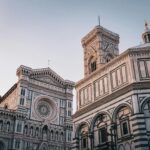
One of Florence’s most recognizable icons is the Duomo of Santa Maria del Fiore, designed by Filippo Brunelleschi. Its monumental dome, the largest in the world at the time of its construction, is a masterpiece of engineering and aesthetics. Brunelleschi’s innovation in dome construction, using an unprecedented scaffolding system, not only defied architectural norms of the time but also symbolized the inventive spirit of the Renaissance. The Duomo’s facade, adorned with colorful marble, serves as a visual invitation that impresses all who behold it.
The Eternal Beauty of David
Michelangelo’s sculpture of David is another Renaissance jewel that exemplifies the pursuit of perfection and the exploration of the human form. Sculpted from marble between 1501 and 1504, David is not merely a representation of the biblical hero but a celebration of human beauty and anatomy. The contrapposto stance and the meticulous details of the sculpture demonstrate Michelangelo’s mastery of form and emotion, capturing a moment of tension and determination. This masterpiece is a testament to the technical skill and emotional depth that characterize Renaissance art.
The Uffizi Gallery: Temple of Art
The Uffizi Gallery is one of the most important and visited museums in the world, housing a vast collection of Renaissance paintings. Here, works by artists such as Botticelli, Raphael, and Titian shine, offering visitors a glimpse of the aesthetic splendor of the era. Botticelli’s famous painting The Birth of Venus perfectly embodies the Renaissance ideal of beauty, with its flowing lines and vibrant colors evoking a sense of harmony and grace. The Uffizi Gallery is not just a space to admire art; it is a place where the history of human creativity is revealed in its purest form.
ITALIA et al went to the most visited museum in Italy, we took a tour of the Galleria degli Uffizi in Florence, where the famous statue of the great David Michelangelo is located. Michelangelo’s David is one of the most representative works of the Italian Renaissance and one of the most famous sculptures in the world. Check it out:
Artistic Innovation
The Renaissance masters did not merely create art; they innovated by exploring new techniques and concepts. The introduction of linear perspective by artists like Brunelleschi and the careful study of human anatomy by Michelangelo and Leonardo da Vinci forever changed the way art was produced and perceived. These artists were at the forefront of a movement that challenged medieval traditions, promoting a new way of thinking about visual representation and the human experience.
The Renaissance was more than just an artistic movement—it was a revolution in thought, creativity, and the understanding of humanity, and Florence stands as the epicenter of that transformation. The masterpieces that adorn the city’s streets, museums, and public spaces continue to inspire awe and admiration, reminding us of the boundless possibilities of human creativity.
Humanist Refuge: Intellectual Enlightenment
The Renaissance in Florence represented a sanctuary for intellectual enlightenment through humanism. This movement not only challenged established norms but also fostered a revolution in thought that resonated for centuries. Emphasizing human dignity, freedom of choice, and the pursuit of knowledge, humanism shaped the trajectory of Western civilization, laying the groundwork for modern science, politics, and literature. As the beating heart of this rebirth, Florence remains a symbol of humanity’s capacity for innovation and creativity, inspiring generations to question, explore, and push the boundaries of knowledge.
This era of transformation transcended the arts, encompassing a philosophical and intellectual revolution that shaped Western thought. At the heart of this movement was humanism, a current that emphasized the dignity and value of the individual, promoting a more positive and comprehensive view of the human experience. Florence, with its vibrant atmosphere and cultural institutions, became a haven for this new way of thinking.
The Rise of Humanism
Humanism emerged as a reaction against medieval scholasticism, which had dominated European universities. While scholasticism focused on theological dogma, humanism sought a revival of classical knowledge, drawing inspiration from ancient Greek and Roman authors. This approach emphasized the importance of reason, observation, and direct experience, leading to a renewed appreciation of human potential.
Florence, as a cultural and intellectual hub, was the birthplace of this movement. The city attracted thinkers from various fields who gathered in academies and discussion circles to debate ideas and explore new concepts. This stimulating environment allowed humanism to flourish, influencing not only philosophy but also politics, science, and literature.
Prominent Humanist Figures
Among the intellectuals who stood out in this context were Marsilio Ficino and Giovanni Pico della Mirandola. Ficino, a philosopher and translator, was responsible for bringing many classical texts to light, including the works of Plato, which he interpreted through a humanist lens. He founded the Platonic Academy in Florence, a space dedicated to the study and discussion of philosophical ideas.
On the other hand, Giovanni Pico della Mirandola is renowned for his work Oration on the Dignity of Man, in which he argued that humans have the potential to shape their own destiny and achieve greatness. Pico claimed that human beings are unique creatures, capable of choosing their own path among life’s various possibilities, highlighting the importance of individual freedom and responsibility.
The Intersection of Disciplines
Humanism did not limit itself to a single field of study; instead, its influence permeated numerous disciplines, reshaping the intellectual landscape of Europe. Humanist ideas paved the way for advances in modern science, promoting empirical methods and the value of observation. Furthermore, humanism had a significant impact on political theory, inspiring new forms of governance and concepts of citizenship.
In literature, writers such as Dante Alighieri, Petrarch, and Boccaccio were deeply influenced by humanist ideas, addressing themes that reflected the human condition, morality, and the pursuit of knowledge. This new literary approach not only enriched the Italian language but also laid the foundation for modern literature.
A Lasting Legacy
The intellectual renaissance sparked by humanism in Florence created a ripple effect that continues to influence contemporary thought. Humanism fostered a profound cultural shift that celebrated human potential, dignity, and intellect, positioning Florence as a lasting symbol of enlightenment. It helped shape the path toward the modern world, revolutionizing not only how we create and appreciate art, but also how we think about humanity, knowledge, and society.
A Cultural Revolution: The Lasting Impact of Florence
When we call Florence the cradle of the Renaissance, we are acknowledging its crucial role in a movement that reshaped not only art and science but also the very way we perceive the world. It is a powerful reminder that culture, creativity, and curiosity can collectively ignite a transformation that echoes through the ages. The impact of the Renaissance continues to be felt, not only in Florence but throughout Western civilization, reinforcing the importance of an environment that fosters artistic expression, intellectual inquiry, and freedom of thought. Florence remains a beacon of inspiration, lighting the way for future generations.
The Renaissance sparked a seismic shift in society. It challenged the status quo, encouraging people to question and think critically about the world around them. This period marked the beginning of modern humanism, emphasizing the value and agency of human beings. Its legacy resonates throughout history, leaving an indelible mark on art, literature, science, and philosophy. Its ideals of humanism, innovation, and creativity continue to inspire generations of thinkers and creators worldwide. As visitors walk the timeless streets of Florence, they are not just tourists but pilgrims paying homage to the birthplace of a cultural revolution that continues to shape our world.
The Renaissance was not merely a moment of artistic splendor; it was a profound transformation that caused a seismic shift in European society. This period challenged the status quo, encouraging people to question established traditions and think critically about the world around them. The ideas that emerged from Florence during this time shaped not only art and science but also the very essence of the human experience.
The Beginning of Modern Humanism
The Renaissance marked the beginning of modern humanism, a movement that emphasized the dignity and capacity of human beings to shape their own destiny. Thinkers of the time, influenced by classical texts and the rich culture of Florence, began to explore human nature, individual potential, and mankind’s relationship with the cosmos. This new perspective encouraged a sense of agency, allowing people to see their role not merely as subjects of divine or monarchical power but as active and creative beings in search of knowledge and truth.
Indelible Legacy
The legacy of the Renaissance echoes through history, leaving an indelible mark in various fields. In art, the principles of perspective, proportion, and anatomy were refined, resulting in works that capture the complexity and beauty of human life. Artists like Michelangelo, Leonardo da Vinci, and Botticelli not only created masterpieces but also set standards that continue to be admired and studied.
In literature, humanism inspired a new form of narrative that explored themes of the human condition, morality, and the pursuit of knowledge. Writers like Dante and Petrarch influenced generations of authors, shaping Western literature and setting a new standard for artistic expression.
Science also benefited greatly from this intellectual renaissance. The emphasis on observation and experience led to significant advances in areas such as anatomy, astronomy, and physics. Thinkers like Copernicus and Galileo were influenced by humanist ideas, challenging traditions and proposing new ways to understand the universe.
Contemporary Inspiration
The ideals of humanism, innovation, and creativity that emerged from Florence continue to inspire generations of thinkers, artists, and creators worldwide. The pursuit of truth, the appreciation of creativity, and intellectual curiosity are principles that still resonate in modern societies, driving new discoveries and innovations.
A Cultural Pilgrimage
As visitors walk the timeless streets of Florence, they are not just tourists but pilgrims paying homage to the birthplace of a cultural revolution that continues to shape our world. Every square, every building, and every work of art stands as a testament to humanity’s capacity to transform thought and artistic expression.
Therefore, when we call Florence the cradle of the Renaissance, we are recognizing its crucial role in a movement that reshaped not only art and science but also the very way we perceive the world. It is a reminder that culture, creativity, and curiosity can collectively ignite a transformation that echoes through the ages.
Florence remains a beacon of cultural inspiration, a testament to the human capacity for innovation and creation. The lasting impact of the Renaissance, born in the city’s vibrant streets, continues to light the way for future generations, reinforcing the importance of an environment that fosters artistic expression, intellectual exploration, and freedom of thought.
Want to get to know Florence better and plan the perfect travel itinerary? Visit ITALIA et al and get firsthand information on Italy’s finest!
You may also like
-

The Best Apps for Saving Money in Italy
- Tuscany
- ▪ Abruzzo
- ▪ Aosta Valley
- ▪ Apulia
- ▪ Basilicata
- ▪ Calabria
- ▪ Campania
- ▪ Emilia-Romagna
- ▪ Friuli Venezia Giulia
- ▪ Lazio
- ▪ Liguria
- ▪ Lombardy
- ▪ Marche
- ▪ Molise
- ▪ Piedmont
- ▪ Sardinia
- ▪ Sicily
- ▪ Trentino South Tyrol
- ▪ Umbria
- ▪ Veneto
-
-
-








You need to be part of our community to leave a comment or reply members.
Log in or purchase one of our incredible itineraries!