- ▪ Emilia-Romagna
- ▪ Lombardy
- ▪ Piedmont
Italian Car Museums: Ferrari, Lamborghini, Maserati, Alfa Romeo and Fiat — A Complete Visitor’s Guide
Content index
Five museums, four regions, one of the densest concentrations of automotive history in the world. What each one contains, what it costs, and what not to miss.
No country has contributed more to automotive culture than Italy. Ferrari, Lamborghini, Maserati, Alfa Romeo, Fiat, Lancia, Pininfarina — these are not just car brands. They are design philosophies, racing dynasties, and in some cases entire economic ecosystems built around a single factory and the town that grew up around it.
The museums that preserve this history are concentrated in a relatively small area: Emilia-Romagna (the so-called Motor Valley between Bologna and Parma), Lombardy, and Piedmont. A well-planned itinerary can cover three or four of them in two days. This guide covers the five principal ones, with the practical details you need to visit each.
Motor Valley: The triangle formed by Bologna, Modena, and Maranello contains more horsepower per square kilometre than anywhere else on earth. Ferrari, Lamborghini, Maserati, Pagani, and Dallara all have their factories within 40 kilometres of each other.
Italian Car Museums — Motor Valley & Beyond
Click a marker for details · Map via CartoDB◆ Maranello · Emilia-Romagna
1. Museo Ferrari — Maranello
Address: Via Dino Ferrari 43, Maranello. Ticket: 32 euros (museum only); combined packages with factory tour available. Hours: Daily 9:30am–7pm (summer); 9:30am–6pm (winter). Closed 25 December and 1 January.
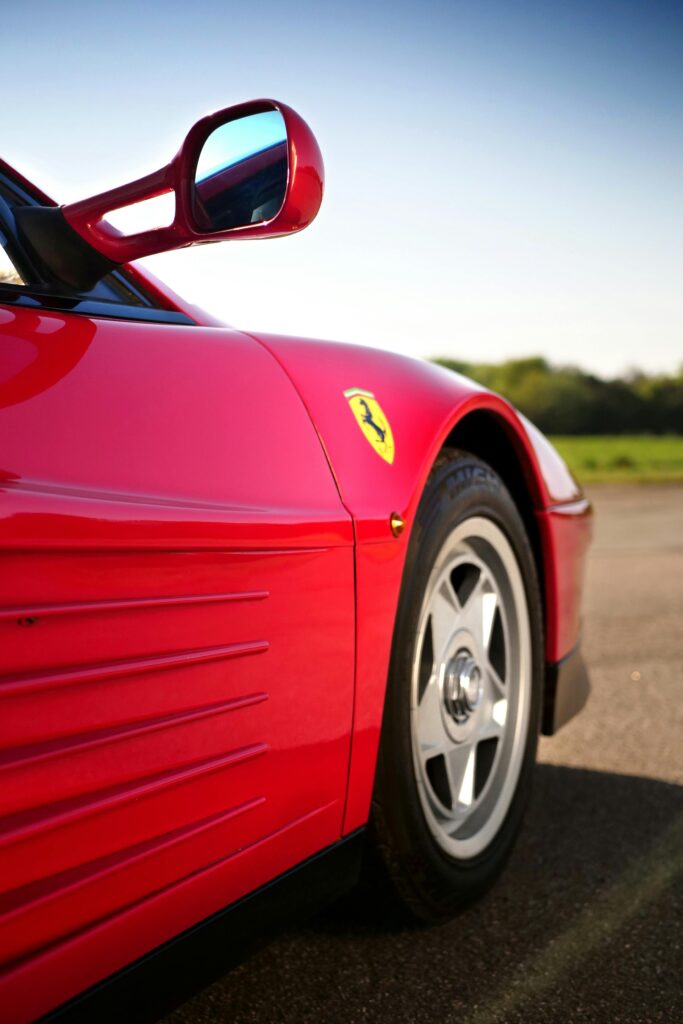
The Ferrari Museum in Maranello — the town where Ferrari has been based since 1943 — is the primary pilgrimage site for anyone interested in the marque. It houses the most comprehensive collection of Ferrari road and race cars in the world, alongside the history of Enzo Ferrari and the company he founded.
The collection
The permanent collection includes the 125 S (the first Ferrari, 1947), the 250 GTO (1962, now one of the most valuable cars ever sold at auction), the F40 (1987, Enzo Ferrari’s last project before his death in 1988), the F50, the Enzo, and the LaFerrari. Formula 1 cars from multiple championship-winning seasons are displayed alongside the road cars. The collection rotates, so the specific cars on display vary.
The simulators
The museum offers Formula 1 racing simulators as a ticketed experience. These are not arcade machines — they are professional-grade simulators replicating the physical forces of driving a Formula 1 car on real circuits. Book in advance if this is part of your plan.
Factory tours
The Ferrari factory in Maranello occasionally offers guided tours, bookable through the museum website. These are not always available and tend to sell out well ahead. Check availability when planning the trip.
Practical notes
Maranello is 18 kilometres south of Modena. Without a car, the most practical approach is a bus from Modena (line 761, approximately 40 minutes) or a taxi. The town itself is small and almost entirely Ferrari-themed. Allow 2 to 3 hours for the museum.
Also in Modena
The Museo Casa Enzo Ferrari in Modena — 18 kilometres from Maranello — is a separate official Ferrari museum, designed by architect Jan Kaplický and opened in 2012 around the house where Enzo Ferrari was born in 1898. Where the Maranello museum focuses on the cars, this one focuses on the man: his early life, his years as a racing driver before he became a manufacturer, and the cultural context of Italian automotive design. It also hosts rotating exhibitions of significant cars from other collections. The canopy roof, inspired by a Ferrari bonnet, is worth seeing on architectural grounds alone. The two museums are easily combined in a single day.
Book at: Museo Ferrari — Maranello
◆ Sant’Agata Bolognese · Emilia-Romagna
2. Museo Lamborghini — Sant’Agata Bolognese
Address: Via Modena 12, Sant’Agata Bolognese. Ticket: 18 euros. Hours: Monday to Saturday 9:30am–6pm. Closed Sundays and public holidays.
Ferruccio Lamborghini founded his car company in 1963, after a dispute with Enzo Ferrari over the clutch on his Ferrari 250 GT. The story — possibly embellished over the decades — is that Enzo told him a tractor manufacturer had no business telling him how to build a sports car. Lamborghini went home and built one that directly competed with Ferrari. The museum in Sant’Agata tells this story with the actual cars.
The collection
The permanent collection traces the full lineage: the 350 GT (the first Lamborghini, 1964), the Miura (1966, widely considered the first modern supercar), the Countach (1974, the poster car of a generation), the Diablo, the Murciélago, the Aventador, and current models. Concept cars and one-off prototypes are also on display.
The Miura
The Miura deserves specific mention. Designed by Marcello Gandini at Bertone when its creators were in their mid-twenties, it introduced the mid-engine layout that became the standard configuration for supercars. The original 1966 Geneva Motor Show car is in the collection.
Practical notes
Sant’Agata Bolognese is 25 kilometres northwest of Bologna. The town has no train station; the practical options are a taxi from Bologna or Modena, or a car. The museum is adjacent to the factory. Factory tours are available separately and require advance booking. Allow 2 hours for the museum.
Book at: Museo Lamborghini
◆ Hombre Farm · Modena Countryside
3. Collezione Maserati — Panini Motor Museum
Address: Via Corletto Sud 320, Modena. Ticket: 15 euros. Hours: By appointment only, March to October. Contact through the museum website.
The Panini Motor Museum is not a corporate museum. It is a private collection built by Umberto Panini — of the Panini sticker collection family — who purchased Maserati’s historic vehicle collection in the early 1990s when the company was struggling financially and the collection was at risk of being dispersed. The museum is housed in a restored agricultural barn on a working organic farm, the Hombre Farm, which produces Parmigiano Reggiano.
ITALIA et al has visited the Panini Motor Museum and interviewed Giovanni Panini, Umberto’s son and the current custodian of the collection. The experience of being shown around the cars by someone whose family literally saved them from auction is unlike anything a corporate museum can offer.
The collection
Over 20 Maseratis spanning the full history of the marque: pre-war Grand Prix cars, the 250F (in which Juan Manuel Fangio won the 1957 Formula 1 World Championship, widely considered the greatest drive in motorsport history), the Tipo 61 ‘Birdcage’ (named for its intricate spaceframe chassis), the A6GCS Pininfarina Berlinetta (one of four surviving examples), the 420M/58 Eldorado (the first racing car with a title sponsor, 1958), and road cars including the Mistral, Ghibli, and 3500 GT.
The Fangio 250F
The 250F in the collection is the car in which Fangio won at the Nürburgring in 1957, coming from over a minute behind to overtake the leading Ferraris on the final lap in what was described by contemporaries as the greatest race ever driven. It is arguably the most historically significant car in any private collection in Italy.
The farm
The Hombre Farm produces Parmigiano Reggiano from a herd of approximately 900 cows. A cheese tasting or farm tour can be combined with the museum visit. This is the correct way to spend a morning in the Modena countryside.
Practical notes
Appointments are essential and must be booked through the museum website. The farm is not accessible by public transport; a car or taxi from Modena (15 minutes) is required. Allow 2 hours for the museum. A new, purpose-built Maserati museum near Modena Airport was announced and is expected to open in 2025 or 2026; check current status before visiting.
Book at: Panini Motor Museum
◆ Arese · Lombardy
4. Museo Storico Alfa Romeo — Arese
Address: Viale Alfa Romeo, 20020 Arese. Ticket: 15 euros. Hours: Wednesday to Friday 10am–6pm; Saturday and Sunday 10am–7pm. Closed Monday and Tuesday.
Alfa Romeo was founded in 1910 in Milan and moved its main operations to Arese, northwest of the city, in 1963. The museum — opened in its current form in 2015 after a major renovation — is housed in the original factory building and covers over 115 years of production, racing, and design.
The structure
The museum is organised across six themed areas: Timeline (chronological history), Beauty (design and styling), Pleasure (the experience of driving), Passion (motorsport), Technology (engineering), and Utility (commercial vehicles). It is one of the most thoughtfully designed automotive museums in Europe in terms of how it presents the material.
The collection
Over 250 cars and motorcycles, including the P2 (1924 Grand Prix car, one of the most important racing cars ever built), the 8C 2300 (1931), the 158/159 Alfetta (which won every Formula 1 World Championship race it entered between 1950 and 1951), the Giulietta, the Giulia, the Montreal, and recent models. The race car section is particularly strong.
The 158 Alfetta
The Alfetta 158 won the first Formula 1 World Championship in 1950 with Juan Manuel Fangio at the wheel. A car that was originally designed in 1938 went on to dominate the inaugural season of the World Championship 12 years later. The car in the museum is one of the surviving originals.
Practical notes
Arese is 15 kilometres northwest of Milan, accessible by Metro Line M1 to Rho Fiera and then a bus (line Z316) to the museum. Allow 3 to 4 hours. The museum has a restaurant and a large Alfa Romeo shop. The adjacent former factory site is being developed into a mixed-use retail and cultural district.
Book at: Museo Storico Alfa Romeo
◆ Turin · Piedmont
5. Centro Storico Fiat — Turin
Address: Corso Settembrini 40, Turin (inside the National Automobile Museum). Ticket: 7 euros (included in the National Automobile Museum entry of 18 euros). Hours: Tuesday to Sunday 10am–7pm. Closed Mondays.
The Centro Storico Fiat is part of the Museo Nazionale dell’Automobile (MAUTO) in Turin, which is itself one of the finest automotive museums in the world. The Fiat collection within it covers the full history of a company that, at its peak, manufactured approximately 80% of Italian cars and was the country’s largest private employer.
Why Fiat matters
Fiat is not a supercar brand. But understanding Italian automotive culture without Fiat is like understanding Italian food without pasta. The company was founded in Turin in 1899, and from the 1950s through the 1970s its small cars — the Topolino, the original Cinquecento, the 127, the Panda — were the vehicles in which ordinary Italians experienced the economic boom of the postwar decades. The Fiat 500 (1957) is as culturally significant as the Ferrari 250 GTO, in a different register.
The collection
Early 1900s luxury tourers, the Topolino (Italy’s affordable car of the 1930s and 40s), the original Fiat 500 (1957), the 124 Spider, the X1/9, the Ritmo, concept cars, and Fiat’s commercial vehicles. The broader MAUTO collection includes cars from over 30 countries and is worth at least half a day independently.
MAUTO
The National Automobile Museum was designed by architect Cino Zucchi and reopened in 2011 after a major renovation. The permanent collection covers the history of the automobile from 1892 to the present day across 40 rooms. It is the most comprehensive automotive museum in Italy and one of the best in the world.
Practical notes
The museum is in Turin, accessible by tram from the city centre (lines 1 and 18). Turin itself is worth at least a full day: the Egyptian Museum (second largest collection of Egyptian antiquities in the world after Cairo), the Palazzo Reale, the Mole Antonelliana, and the city’s celebrated chocolate and aperitivo culture. Allow 2 to 3 hours for MAUTO.
Book at: National Automobile Museum
Planning a Motor Valley itinerary
The most efficient base for the Emilia-Romagna museums is Bologna or Modena. Both are on the high-speed rail line between Milan and Florence. From Bologna, Maranello and Sant’Agata Bolognese are both under an hour by car or taxi. The Panini Museum is 15 minutes from Modena centre.
A two-day itinerary works as follows: Day 1 in Maranello (Ferrari Museum) and Sant’Agata Bolognese (Lamborghini Museum), with lunch in Modena. Day 2 at the Panini Motor Museum in the morning (appointment required), followed by the afternoon in Bologna or a train to Milan for the Alfa Romeo Museum the following day. The Fiat/MAUTO museum in Turin requires a separate half-day or full day.
The distances between the Emilia-Romagna museums make a car or regular taxis almost essential. The region is also one of the best in Italy for food — Modena specifically has more Michelin-starred restaurants per capita than almost anywhere in the country. Plan your Motor Valley trip with us!
You may also like
-

The Best Apps for Saving Money in Italy
- Tuscany
- ▪ Abruzzo
- ▪ Aosta Valley
- ▪ Apulia
- ▪ Basilicata
- ▪ Calabria
- ▪ Campania
- ▪ Emilia-Romagna
- ▪ Friuli Venezia Giulia
- ▪ Lazio
- ▪ Liguria
- ▪ Lombardy
- ▪ Marche
- ▪ Molise
- ▪ Piedmont
- ▪ Sardinia
- ▪ Sicily
- ▪ Trentino South Tyrol
- ▪ Umbria
- ▪ Veneto
-
-

-



You need to be part of our community to leave a comment or reply members.
Log in or purchase one of our incredible itineraries!